Salir
Salir

Prenatal testing
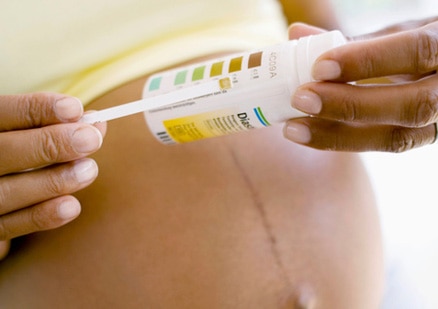
Prenatal care at Kaiser Permanente includes routine testing and screening to make sure you’re healthy and that your baby is developing normally. Your doctor will give you specific guidelines on which tests you might need.
Depending on your health history and how your pregnancy is progressing, we may recommend additional prenatal screenings or diagnostic tests.
Testing for birth defects
You get to choose whether to have prenatal testing for birth defects. These tests can give us information about your developing baby’s health, but they can’t detect all birth defects.
Screening tests can identify risk that your baby may be born with certain birth defects. These screenings are completely safe and pose no risk to your pregnancy.
A screening test may be right for you if:
- You want to know your baby’s risk for birth defects like Down syndrome or spina bifida
- You want more information before having a diagnostic procedure
- You’re OK with a test that might miss certain birth defects
Diagnostic procedures can accurately detect certain birth defects. These tests are considered safe, but they’re more invasive than other prenatal tests and there’s a small risk of miscarriage (about 1 in 1,000).
We’ll talk about all your options during your prenatal care appointments. However, it’s your choice. If you’re wondering whether it’s the right choice for you, our prenatal testing decision guide can help you understand your options.
A diagnostic procedure may be right for you if:
- You want to know for certain whether your baby has a chromosome condition like Down syndrome
- You're willing to have a test that includes a very small risk of miscarriage (1 in 300)
Is testing for birth defects the right choice for you?
Choosing whether you’ll have these tests is a personal decision. Keep in mind that some tests vary by state — we’ll talk more about them at your prenatal care appointments and answer any questions you might have.
Screening tests
Cell-free DNA Screening (cfDNA)
Testing at 10 to 24 weeks.
- No increased risk for miscarriage.
- Screens for select chromosome conditions
- Requires additional testing to confirm a diagnosis.
Maternal Serum AFP Screening (MS-AFP)
- No increased risk for miscarriage.
- Screens for select chromosome conditions and birth defects.
Quad marker screening
Testing starts in the second trimester.
- No increased risk for miscarriage.
- Screens for select chromosome conditions and birth defects.
2 types of diagnostic procedures
CVS (chorionic villus sampling)
Testing starts in the first trimester.
- Risk for miscarriage is less than 1 in 450.
- Detects more than 99% of chromosome abnormalities.
- Follow-up testing may be needed if results are unclear.
Amniocentesis
Testing in the second trimester only.
- Risk for miscarriage is about 1 in 900.
- Detects more than 99% of chromosome abnormalities.
- Follow-up testing is rarely needed.